Discover our next-generation R-290 heat pump platform — Learn More

DaikinAir Innovation & Technology

Advancing heat pump performance through AI-powered controls, natural refrigerant platforms, digital twin modeling, and smart grid integration.

Four Innovation Pillars

Our R&D investment is focused on four pillars that define the next generation of heat pump technology.
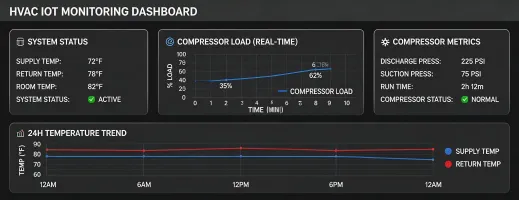
AI-powered predictive maintenance dashboard

AI-Driven Predictive Maintenance

Machine learning algorithms analyze compressor vibration signatures, refrigerant pressures, and electrical current patterns in real-time. The system predicts component degradation 2-4 weeks before failure, enabling scheduled intervention during planned downtime windows. Our cloud platform processes telemetry from over 5,000 connected systems globally.
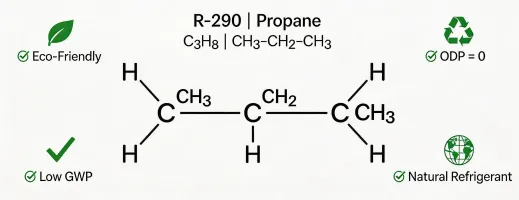
Low-GWP natural refrigerant technology

Natural Refrigerant Platforms

Our R-290 (propane, GWP 3) and R-744 (CO2, GWP 1) platforms eliminate high-GWP HFC dependency while maintaining equivalent or superior COP performance. Purpose-engineered charge-minimized circuits and enhanced safety systems make natural refrigerants viable for commercial-scale installations.
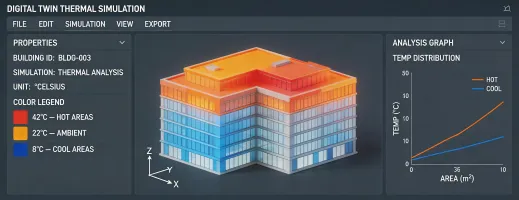
Digital twin thermal modeling

Digital Twin Modeling

Before a single pipe is connected, our digital twin platform simulates your building thermal envelope, occupancy patterns, and weather exposure to optimize heat pump sizing and control strategy. Post-installation, the digital twin continues to learn from live sensor data, automatically adjusting setpoints for evolving conditions.
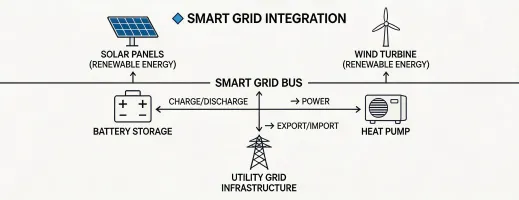
Smart grid and demand response integration

Smart Grid Integration

Our heat pumps participate in demand response programs by shifting thermal loads to off-peak periods, leveraging thermal storage capacity within the building mass. Grid-interactive control protocols (OpenADR 2.0b) allow utilities to call on aggregated heat pump capacity as virtual power plants during peak grid stress events.

Refrigerant Technology Comparison

Refrigerant GWP ODP Flammability Typical COP DaikinAir Support
R-290 (Propane) 3 0 A3 (Highly Flammable) 4.5 – 5.2 Full production range
R-744 (CO2) 1 0 A1 (Non-flammable) 3.2 – 4.0 High-temp cascade systems
R-1234ze (HFO) 7 0 A2L (Mildly Flammable) 4.0 – 4.8 Select commercial models
R-410A (HFC) 2,088 0 A1 (Non-flammable) 3.8 – 4.5 Legacy — being phased out
R-134a (HFC) 1,430 0 A1 (Non-flammable) 3.5 – 4.2 Legacy — being phased out

Selection Considerations: Refrigerant Transition Pathways

The Kigali Amendment and EU F-Gas Regulation (517/2014, revised 2024) are accelerating the global phase-down of high-GWP HFCs. Two distinct transition pathways have emerged, each with measurable advantages and documented limitations.

Natural Refrigerants (R-290, R-717, R-744)

Natural refrigerants offer zero or near-zero GWP (R-290: GWP 3, R-744: GWP 1, R-717: GWP 0) and carry no patent dependencies, reducing long-term supply-chain risk. CO2 transcritical systems have become increasingly viable in climates up to 38°C ambient, and ammonia remains the dominant choice for large industrial refrigeration above 500 kW.

Documented limitations: R-290 is classified A3 (highly flammable) under ISO 817, restricting charge sizes to <500 g per circuit in many jurisdictions without additional safety measures. R-717 (ammonia) is toxic at concentrations above 25 ppm and requires dedicated machinery rooms with gas detection systems. CO2 systems operate at pressures exceeding 100 bar on the high side, requiring specialized components and trained technicians.

Synthetic Low-GWP HFOs (R-1234yf, R-1234ze)

HFO refrigerants offer near drop-in compatibility with existing HFC infrastructure, significantly reducing retrofit costs. R-1234ze (GWP 7) is classified A2L (mildly flammable), allowing larger charge sizes than A3 naturals with simpler safety requirements. The existing HVAC technician workforce can transition to HFOs with minimal retraining.

Documented limitations: HFOs are patent-protected, creating supply concentration risk and higher refrigerant costs (3-5x vs R-410A per kg as of 2025). Some HFOs decompose into trifluoroacetic acid (TFA) in the atmosphere, raising long-term environmental persistence questions under ECHA evaluation. Long-term regulatory status remains uncertain as EU PFAS restriction proposals could reclassify certain HFOs.

Inverter (Variable Speed) vs. Fixed Speed Compressors

Inverter-driven compressors modulate capacity from 20-100% of rated output, delivering 30-50% energy savings at part-load conditions typical of commercial buildings where occupancy varies throughout the day. They also provide soft-start capability, reducing inrush current and mechanical wear on bearings and valves.

Fixed-speed compressors cost 15-25% less upfront, require simpler control wiring, and have a longer field service track record. For constant-load applications such as industrial process cooling or ice production where the compressor runs at or near full capacity continuously, fixed-speed units deliver comparable lifecycle cost with lower maintenance complexity.

Breakeven analysis: At electricity prices above $0.10/kWh and annual operating hours exceeding 4,000, inverter-driven systems typically achieve payback within 2-3 years. Below these thresholds, fixed-speed remains economically competitive.

Technology Roadmap

2026

Full R-290 Commercial Range

Complete transition of all commercial air-source models to R-290 natural refrigerant platform.

2027

Digital Twin v3.0

Real-time weather-adaptive control with 15-minute demand forecasting and automated setpoint optimization.

2028

150°C Heat Pump

Ultra-high-temperature cascade system for industrial steam replacement applications.

2030

Net-Zero Manufacturing

All three factories achieve net-zero carbon emissions through on-site renewables and process electrification.

Explore Smart Cooling Technology

Discuss how our innovation pipeline can address your facility thermal challenges with future-ready solutions.

Connect With Our R&D Team