Discover our next-generation R-290 heat pump platform — Learn More

DaikinAir Industry Applications

Engineered heat pump solutions tailored to the thermal demands of six core market sectors worldwide.

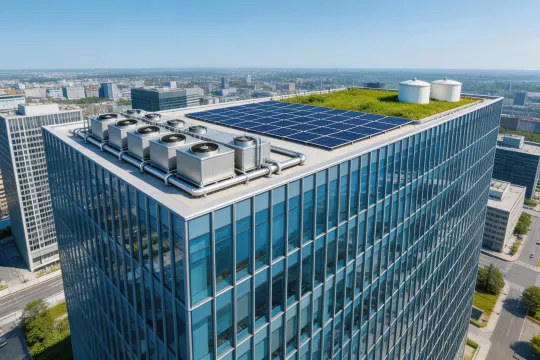
Commercial building heat pump installation

Commercial Buildings

Office towers, hotels, hospitals, and retail complexes require reliable space heating and cooling with minimal noise impact. DaikinAir heat pumps deliver variable-capacity modulation that matches dynamic occupancy loads while maintaining strict comfort standards.

  • Variable-speed inverter technology for part-load efficiency
  • Sound pressure levels below 65 dB(A) for urban installations
  • Simultaneous heating and cooling capability
  • BMS integration via BACnet / Modbus / LonWorks

Discuss Your Project
Data center cooling with heat pumps

Data Centers

Data centers generate immense waste heat that can be captured and reused. DaikinAir heat pump systems provide precision cooling while recovering thermal energy for nearby buildings or district heating networks, improving overall PUE.

  • Heat recovery for district heating integration
  • Free cooling mode below ambient switchover point
  • N+1 redundancy configurations available
  • Chilled water supply down to 5°C / 41°F
Discuss Your Project
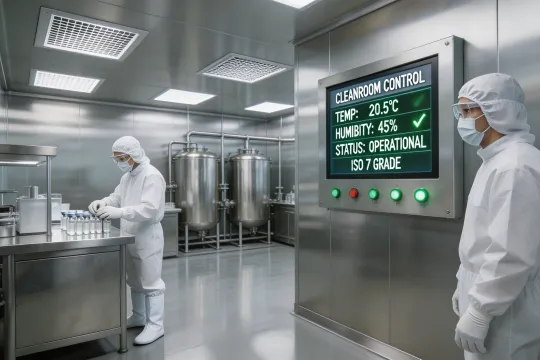
Pharmaceutical facility temperature control

Pharmaceutical & Life Sciences

GMP-compliant manufacturing demands extremely tight temperature and humidity tolerances. DaikinAir heat pumps provide the thermal stability required for cleanroom environments, vaccine storage, and API production processes.

  • Temperature control accuracy ±0.5°C
  • GMP/FDA-compliant system documentation
  • Redundant control loops for critical processes
  • Validated performance qualification (IQ/OQ/PQ)
Discuss Your Project
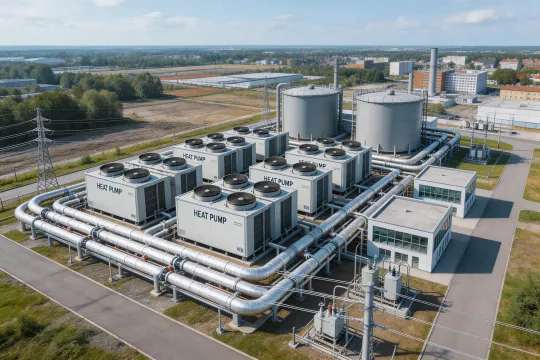
District heating heat pump station

District Heating & Energy Networks

Municipal and campus district energy networks are transitioning from fossil fuels to large-scale heat pumps. DaikinAir high-temperature systems deliver supply water at 60-90°C from ambient, seawater, or waste heat sources.

  • MW-scale capacity for district-level deployment
  • Supply temperatures up to 90°C
  • Waste heat and seawater source compatibility
  • Smart grid integration with demand response
Discuss Your Project
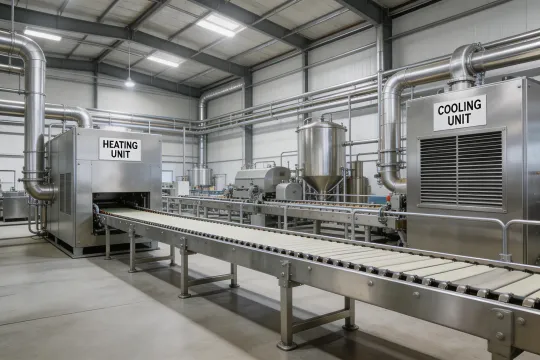
Food processing thermal systems

Food & Beverage Processing

Food and beverage facilities need simultaneous heating for pasteurization and cooling for product storage. DaikinAir systems provide both from a single platform, recovering waste heat from cooling processes to supply hot water.

  • Simultaneous heating and cooling from one unit
  • Hot water delivery up to 80°C for pasteurization
  • HACCP-compatible system design
  • Low-GWP refrigerants for food-safe environments
Discuss Your Project
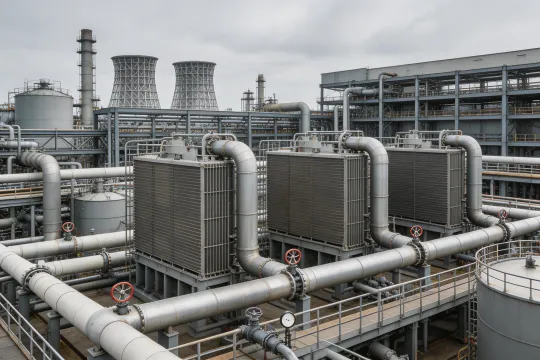
Industrial process heating

Industrial Processing

Chemical, textile, pulp and paper, and mining operations require reliable process heat at temperatures traditional heat pumps cannot reach. DaikinAir high-temperature cascade systems deliver up to 120°C, replacing steam boilers in many applications.

  • High-temperature output up to 120°C
  • Cascade and transcritical CO2 system options
  • Corrosion-resistant construction for harsh environments
  • ATEX-rated options for hazardous areas
Discuss Your Project

Project Reference: Municipal District Heating

In 2022, DaikinAir delivered a 4.2 MW water-source heat pump station for a municipal district heating network in northern Poland, replacing two aging 6 MW gas boilers that had served a residential area of approximately 2,800 households since 1994.

The system extracts thermal energy from a nearby river at 4-18°C seasonal range and delivers supply water at 72°C to the existing distribution network. Two DaikinAir cascade heat pump units operate with R-744 (CO2) on the high-temperature stage and R-290 on the low-temperature stage, achieving a weighted seasonal COP of 3.4 across the October-to-April heating season.

Post-commissioning monitoring over the 2022-2023 heating season confirmed annual CO2 emissions reduction of 3,200 tonnes compared to the previous gas boiler operation. The municipality reported a 28% reduction in thermal energy cost per MWh delivered. The project required an 800 kVA electrical supply upgrade, completed in coordination with the local utility over a 16-week timeline.

Parameter Value
Total Thermal Capacity4.2 MW
Heat SourceRiver water (4-18°C)
Supply Temperature72°C
Refrigerant (High Stage)R-744 (CO2)
Refrigerant (Low Stage)R-290 (Propane)
Seasonal COP3.4
CO2 Reduction3,200 tonnes/year
CommissioningSeptember 2022

Application Scope & Technical Boundaries

Heat pumps are not a universal replacement for all thermal systems. Understanding the operational boundaries of heat pump technology helps engineers specify the right solution for each application.

Temperature Ceiling

Current cascade heat pump technology delivers supply water up to 120°C. Applications requiring steam above 150°C (such as certain chemical reactors, sterilization autoclaves, and turbine-driven processes) still require combustion-based boilers or electric resistance heating. Our 2028 roadmap targets 150°C, but this remains in development.

Cold Climate Performance

Air-source heat pump COP decreases as ambient temperature drops. At -15°C ambient, typical COP falls to 2.0-2.5 compared to 4.5-5.2 at 7°C rated conditions. In climates with sustained temperatures below -20°C, supplemental heating or ground-source/water-source systems are recommended to maintain acceptable efficiency.

Electrical Infrastructure

Replacing gas boilers with electric heat pumps increases site electrical demand. A 500 kW thermal output heat pump draws approximately 125 kW electrical input at COP 4.0. Facilities with constrained electrical supply or high demand charges should conduct a detailed utility impact assessment before specifying heat pump capacity.

Need a Heat Pump Solution for Your Industry?

Our application engineers specialize in matching the right system to your specific thermal requirements.

Request an Application Review